The Learning Platform with Impact
Maximize your impact outside of class with cinematic, customizable textbooks and real-time data, backed by a powerful assessment platform.
Book A Demo
Learn More
Introducing Dynamic MCQs
In-class assessment is an effective tool for incentivizing genuine study.
December 2025
ON THIS PAGE
- What are Dynamic MCQs?
- Why Don’t Other Platforms Offer DMCQs?
- The Technology Behind DMCQs
- Resistant to Answer-Sharing
- Infinite Opportunities for Practice
- More Control Over Assessment
- Complete Customizability
- How to Set Up DMCQs for Your Class
Maximize impact. Cinematic,
customizable textbooks.
Book A Demo
Learn More
In-class assessment is one of the strongest incentives for genuine study. But traditional multiple-choice questions come with real limitations: answer-sharing, memorization, and limited opportunities for meaningful practice.
Dynamic Multiple-Choice Questions (DMCQs) solve this by generating unique, mathematically equivalent versions of the same question for every student and every attempt, while preserving fairness, rigor, and diagnostic value.
This isn’t simple randomization. It requires an assessment engine designed to validate, test, and control every generated version before it ever reaches a student.
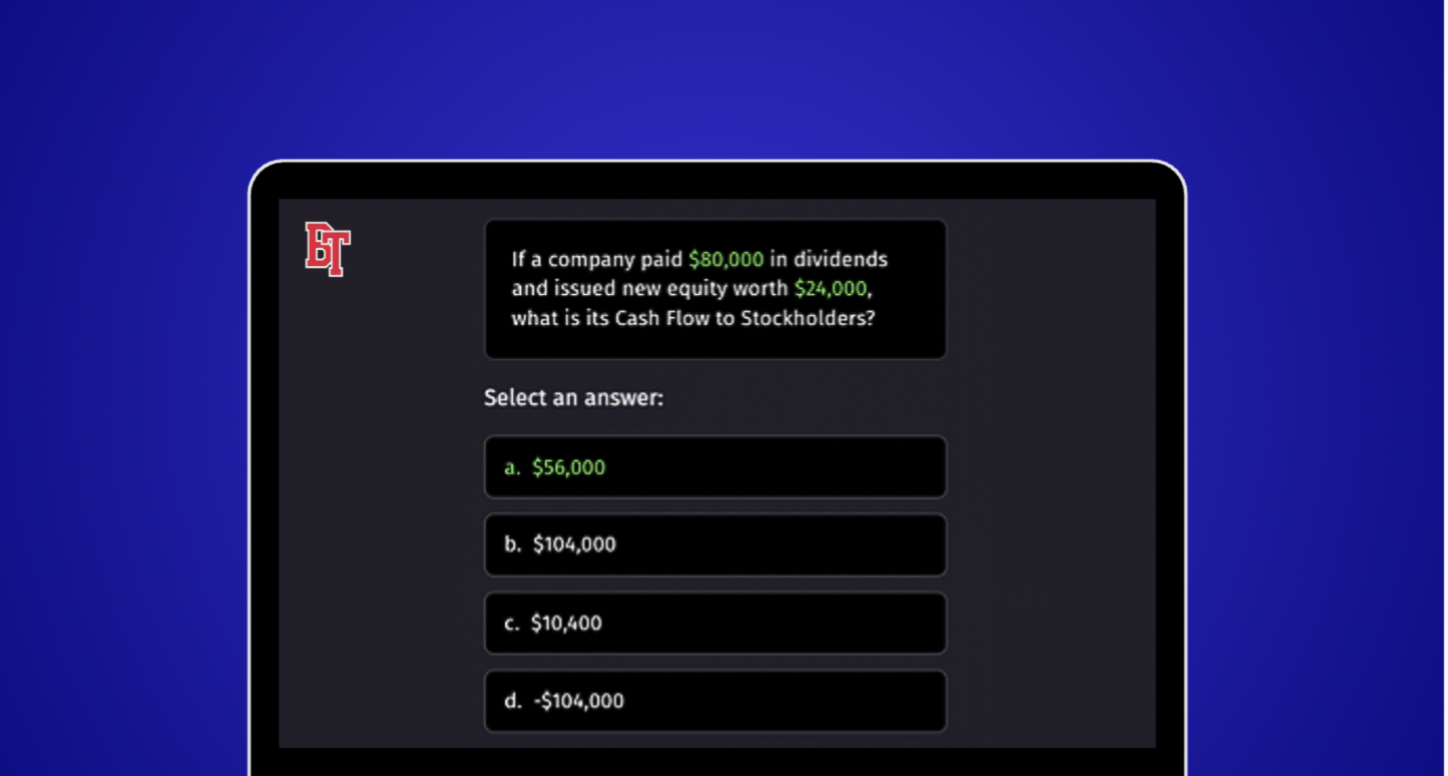
What are Dynamic MCQs (DMCQs)?
A DMCQ is a quantitative question in which the numbers change for each student and each attempt, while the underlying concept remains the same.
- Every student sees a different version
- Every attempt generates new values
- The level of difficulty stays consistent
- The learning objective remains unchanged
Each DMCQ includes four answer options, where:
- One option is generated using the correct formula
- The remaining options are generated using common student misconceptions, not random errors
This ensures DMCQs assess understanding, not guesswork or pattern recognition.
Why Don’t Other Platforms Offer DMCQs?
Put simply, generating new numbers is easy. Generating valid, fair, and diagnostic questions at scale is not.
A true DMCQ engine must:
- Prevent answer collisions (when two formulas produce the same result)
- Enforce a minimum spread so options are never unrealistically close
- Use misconception-driven distractors that reflect how students actually make mistakes
- Automatically validate every version before it is shown to a student
This level of control requires an advanced assessment engine — not just a question bank with randomized variables.

The Technology Behind DMCQs
1. Question & Variable Design
Each DMCQ begins with carefully identified variables and realistic numerical ranges. For every student and every attempt, values are randomly selected from within these ranges, creating a unique version of the question while preserving instructional intent.
2. Answer Options & Distractor Design
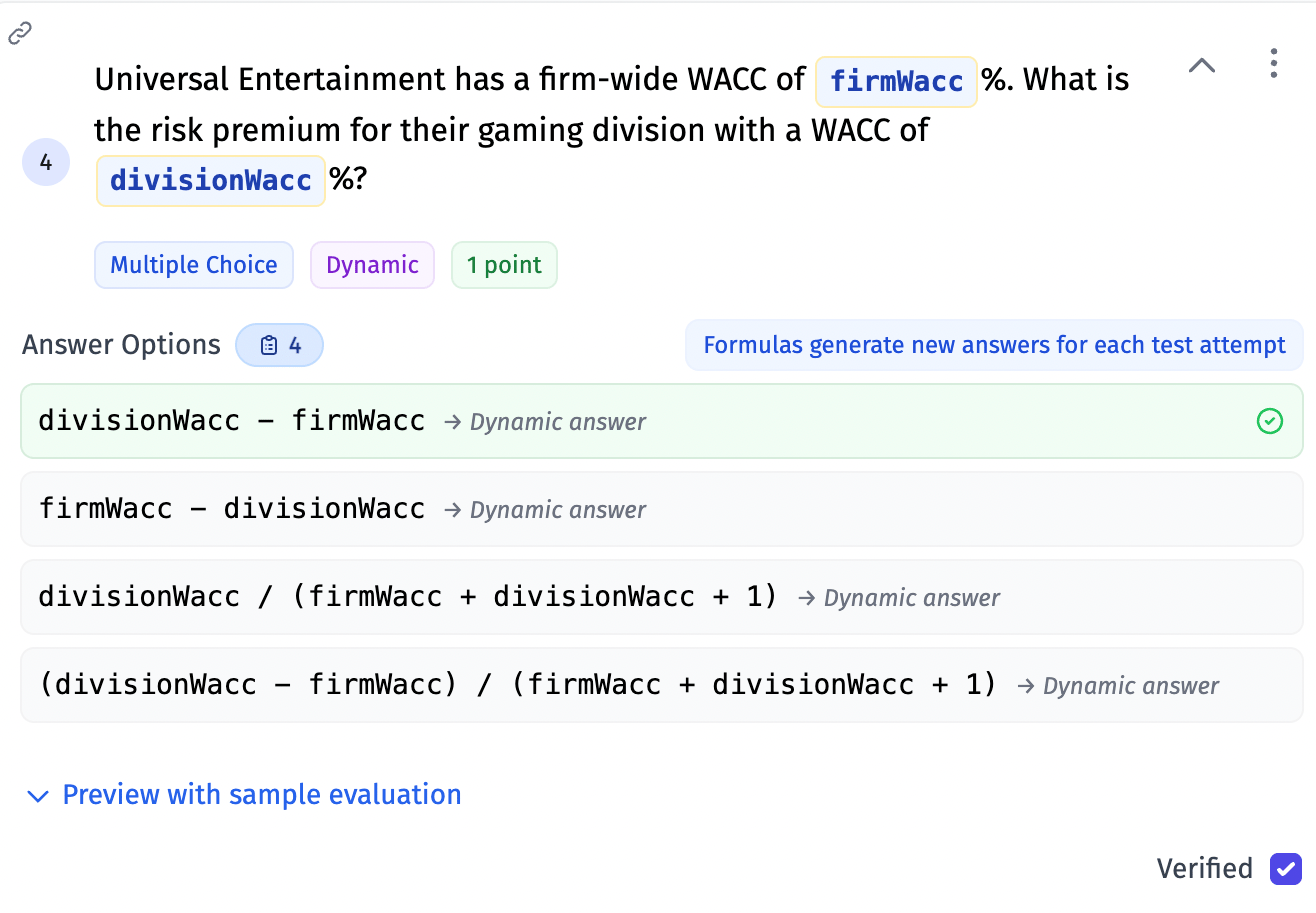
Each of the four answer options is generated using a predefined formula:
- The correct option uses the correct equation
- Distractors are built using known calculation mistakes students commonly make
This ensures that selecting a wrong answer reveals how a student misunderstood the concept, not just that they got it wrong.3. Collision DetectionSometimes, two different formulas can produce the same result. In multiple-choice questions, that’s a serious problem.
Collision detection automatically:
- Identifies duplicate outcomes
- Recalculates distractors when necessary
- Ensures the correct answer remains unique
The system also enforces a minimum percentage spread between options, scaled to the size of the values. Students will never see implausibly close choices like 0.1111 and 0.1112.
4. Built-In Fail-SafesThe system runs tests with each random combination of variables generated. If too many answer options are too close to each other, or one or more fails to calculate, the system picks a new set of variables. All behind the scenes, before the question is shown to the student taking the quiz.
Before any question is shown to a student, the system:
- Tests each generated version
- Confirms all answer options calculate correctly
- Rejects versions where options are too close or invalid
If a version fails validation, a new set of variables is generated automatically, all behind the scenes.
Resistant to Answer-Sharing
Cheating can’t be eliminated entirely, and AI use is increasingly common, but answer-sharing is preventable.
With static MCQs, students can share answers with classmates, post questions to solution sites, or look over a peer’s shoulder during exams.
With DMCQs, students see the same concept, but they won’t see the same numbers. That makes copying answers far less effective in both in-person and online settings.
Infinite Opportunities for Practice
Practice leads to mastery, but only if the practice stays meaningful.
Because each attempt generates a new version, DMCQs allow students to:
- Practice repeatedly without memorizing patterns
- Focus on process rather than outcomes
- Build confidence through repetition
DMCQs pair naturally with short instructional videos, editable text, and immediate feedback, reinforcing learning outside the classroom.
More Control Over Assessment
Dynamic short-answer questions are powerful, but in large or lower-level quantitative courses they can introduce grading complexity, student confusion, and margin-of-error disputes.
DMCQs offer a familiar format for 2000- and 3000-level courses while preserving rigor and diagnostic power.
The Blended Teaching quizzing platform allows instructors to:
- Mix DMCQs and short-answer questions
- Adjust difficulty by changing question ratios
- Analyze question effectiveness and student performance
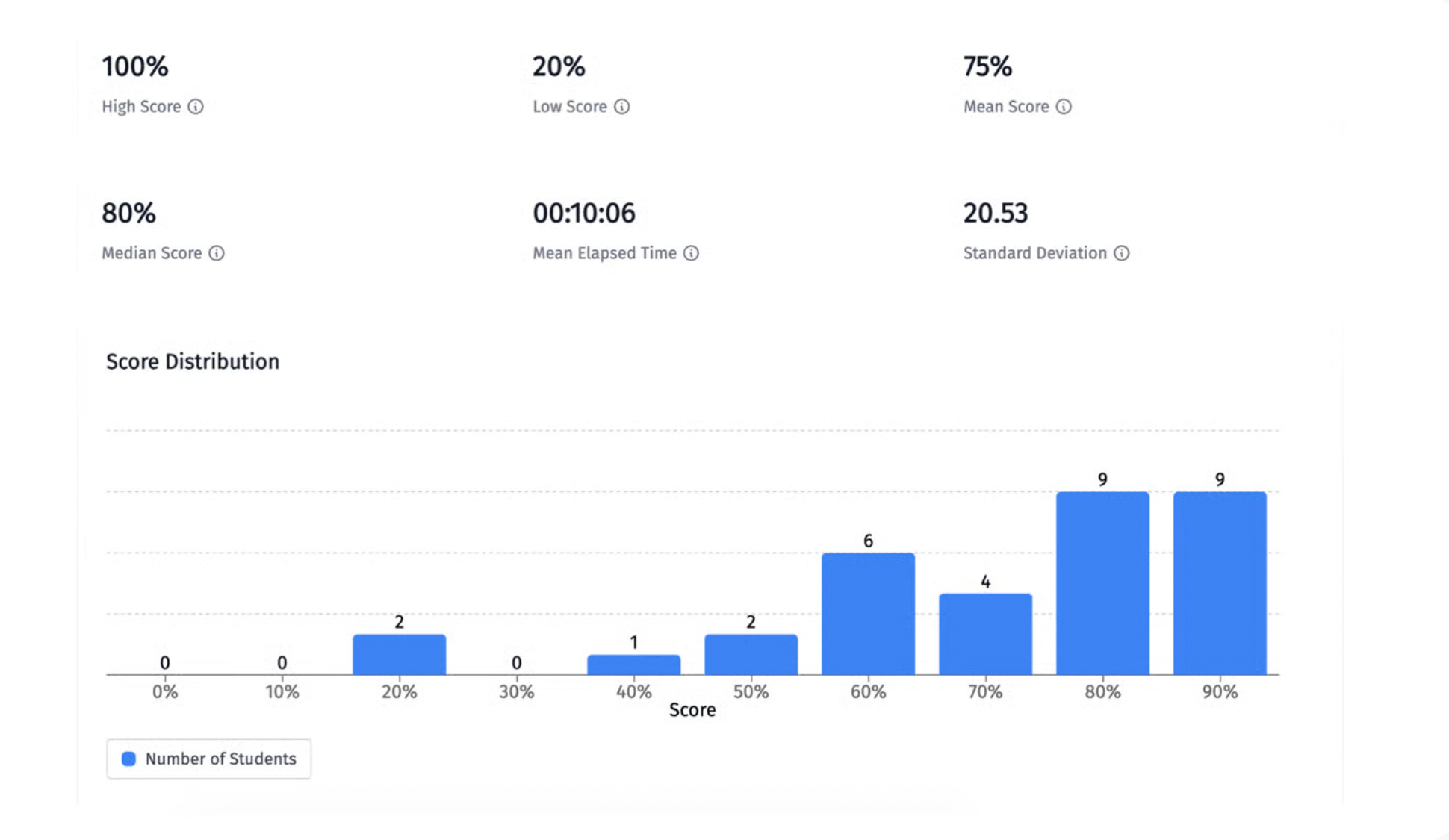
Powerful analytics show:
- Which questions are most difficult
- Which distractors are most frequently chosen
- How effectively each question differentiates A, B, and C students
The result: the grade distribution you want, with far less friction.
Complete Customizability
Dynamic question banks are fully customizable:
- Edit existing questions
- Build your own from scratch
- Combine your questions with ours
Whether you want full control or a fast setup, the platform supports both.
How to Set Up DMCQs for Your Class
If you already use Blended Teaching, you can start using DMCQ banks immediately in your finance courses. Setup takes just a few minutes, with full documentation available.
Not yet a Blended Teaching user? Walk through the platform with a member of our team.
Book A Demo

Book A Demo
hey@blended-teaching.com
The Learning Platform with Impact
Maximize your impact outside of class with cinematic, customizable textbooks and real-time data, backed by a powerful assessment platform.
Book A Demo
Learn More
Introducing Dynamic MCQs
In-class assessment is an effective tool for incentivizing genuine study.
December 2025
ON THIS PAGE
- What are Dynamic MCQs?
- Why Don’t Other Platforms Offer DMCQs?
- The Technology Behind DMCQs
- Resistant to Answer-Sharing
- Infinite Opportunities for Practice
- More Control Over Assessment
- Complete Customizability
- How to Set Up DMCQs for Your Class
Maximize impact.
Cinematic,
customizable
textbooks.
Book A Demo
Learn More
In-class assessment is one of the strongest incentives for genuine study. But traditional multiple-choice questions come with real limitations: answer-sharing, memorization, and limited opportunities for meaningful practice.
Dynamic Multiple-Choice Questions (DMCQs) solve this by generating unique, mathematically equivalent versions of the same question for every student and every attempt, while preserving fairness, rigor, and diagnostic value.
This isn’t simple randomization. It requires an assessment engine designed to validate, test, and control every generated version before it ever reaches a student.
What are Dynamic MCQs (DMCQs)?
A DMCQ is a quantitative question in which the numbers change for each student and each attempt, while the underlying concept remains the same.
- Every student sees a different version
- Every attempt generates new values
- The level of difficulty stays consistent
- The learning objective remains unchanged
Each DMCQ includes four answer options, where:
- One option is generated using the correct formula
- The remaining options are generated using common student misconceptions, not random errors
This ensures DMCQs assess understanding, not guesswork or pattern recognition.
Why Don’t Other Platforms Offer DMCQs?
Put simply, generating new numbers is easy. Generating valid, fair, and diagnostic questions at scale is not.
A true DMCQ engine must:
- Prevent answer collisions (when two formulas produce the same result)
- Enforce a minimum spread so options are never unrealistically close
- Use misconception-driven distractors that reflect how students actually make mistakes
- Automatically validate every version before it is shown to a student
This level of control requires an advanced assessment engine — not just a question bank with randomized variables.
The Technology Behind DMCQs
1. Question & Variable Design
Each DMCQ begins with carefully identified variables and realistic numerical ranges. For every student and every attempt, values are randomly selected from within these ranges, creating a unique version of the question while preserving instructional intent.
2. Answer Options & Distractor Design
Each of the four answer options is generated using a predefined formula:
- The correct option uses the correct equation
- Distractors are built using known calculation mistakes students commonly make
This ensures that selecting a wrong answer reveals how a student misunderstood the concept, not just that they got it wrong.3. Collision DetectionSometimes, two different formulas can produce the same result. In multiple-choice questions, that’s a serious problem.
Collision detection automatically:
- Identifies duplicate outcomes
- Recalculates distractors when necessary
- Ensures the correct answer remains unique
The system also enforces a minimum percentage spread between options, scaled to the size of the values. Students will never see implausibly close choices like 0.1111 and 0.1112.
4. Built-In Fail-SafesThe system runs tests with each random combination of variables generated. If too many answer options are too close to each other, or one or more fails to calculate, the system picks a new set of variables. All behind the scenes, before the question is shown to the student taking the quiz.
Before any question is shown to a student, the system:
- Tests each generated version
- Confirms all answer options calculate correctly
- Rejects versions where options are too close or invalid
If a version fails validation, a new set of variables is generated automatically, all behind the scenes.
Resistant to Answer-Sharing
Cheating can’t be eliminated entirely, and AI use is increasingly common, but answer-sharing is preventable.
With static MCQs, students can share answers with classmates, post questions to solution sites, or look over a peer’s shoulder during exams.
With DMCQs, students see the same concept, but they won’t see the same numbers. That makes copying answers far less effective in both in-person and online settings.
Infinite Opportunities for Practice
Practice leads to mastery, but only if the practice stays meaningful.
Because each attempt generates a new version, DMCQs allow students to:
- Practice repeatedly without memorizing patterns
- Focus on process rather than outcomes
- Build confidence through repetition
DMCQs pair naturally with short instructional videos, editable text, and immediate feedback, reinforcing learning outside the classroom.
More Control Over Assessment
Dynamic short-answer questions are powerful, but in large or lower-level quantitative courses they can introduce grading complexity, student confusion, and margin-of-error disputes.
DMCQs offer a familiar format for 2000- and 3000-level courses while preserving rigor and diagnostic power.
The Blended Teaching quizzing platform allows instructors to:
- Mix DMCQs and short-answer questions
- Adjust difficulty by changing question ratios
- Analyze question effectiveness and student performance
Powerful analytics show:
- Which questions are most difficult
- Which distractors are most frequently chosen
- How effectively each question differentiates A, B, and C students
The result: the grade distribution you want, with far less friction.
Complete Customizability
Dynamic question banks are fully customizable:
- Edit existing questions
- Build your own from scratch
- Combine your questions with ours
Whether you want full control or a fast setup, the platform supports both.
How to Set Up DMCQs for Your Class
If you already use Blended Teaching, you can start using DMCQ banks immediately in your finance courses. Setup takes just a few minutes, with full documentation available.
Not yet a Blended Teaching user? Walk through the platform with a member of our team.
Book A Demo
Book A Demo
hey@blended-teaching.com
The Learning Platform with Impact
Maximize your impact outside of class with cinematic, customizable textbooks and real-time data, backed by a powerful assessment platform.
Book A Demo
Learn More
Introducing Dynamic MCQs
In-class assessment is an effective tool for incentivizing genuine study.
December 2025
ON THIS PAGE
- What are Dynamic MCQs?
- Why Don’t Other Platforms Offer DMCQs?
- The Technology Behind DMCQs
- Resistant to Answer-Sharing
- Infinite Opportunities for Practice
- More Control Over Assessment
- Complete Customizability
- How to Set Up DMCQs for Your Class
Maximize impact.
Cinematic,
customizable
textbooks.
Book A Demo
Learn More
In-class assessment is one of the strongest incentives for genuine study. But traditional multiple-choice questions come with real limitations: answer-sharing, memorization, and limited opportunities for meaningful practice.
Dynamic Multiple-Choice Questions (DMCQs) solve this by generating unique, mathematically equivalent versions of the same question for every student and every attempt, while preserving fairness, rigor, and diagnostic value.
This isn’t simple randomization. It requires an assessment engine designed to validate, test, and control every generated version before it ever reaches a student.
What are Dynamic MCQs (DMCQs)?
A DMCQ is a quantitative question in which the numbers change for each student and each attempt, while the underlying concept remains the same.
- Every student sees a different version
- Every attempt generates new values
- The level of difficulty stays consistent
- The learning objective remains unchanged
Each DMCQ includes four answer options, where:
- One option is generated using the correct formula
- The remaining options are generated using common student misconceptions, not random errors
This ensures DMCQs assess understanding, not guesswork or pattern recognition.
Why Don’t Other Platforms Offer DMCQs?
Put simply, generating new numbers is easy. Generating valid, fair, and diagnostic questions at scale is not.
A true DMCQ engine must:
- Prevent answer collisions (when two formulas produce the same result)
- Enforce a minimum spread so options are never unrealistically close
- Use misconception-driven distractors that reflect how students actually make mistakes
- Automatically validate every version before it is shown to a student
This level of control requires an advanced assessment engine — not just a question bank with randomized variables.
The Technology Behind DMCQs
1. Question & Variable Design
Each DMCQ begins with carefully identified variables and realistic numerical ranges. For every student and every attempt, values are randomly selected from within these ranges, creating a unique version of the question while preserving instructional intent.
2. Answer Options & Distractor Design
Each of the four answer options is generated using a predefined formula:
- The correct option uses the correct equation
- Distractors are built using known calculation mistakes students commonly make
This ensures that selecting a wrong answer reveals how a student misunderstood the concept, not just that they got it wrong.3. Collision DetectionSometimes, two different formulas can produce the same result. In multiple-choice questions, that’s a serious problem.
Collision detection automatically:
- Identifies duplicate outcomes
- Recalculates distractors when necessary
- Ensures the correct answer remains unique
The system also enforces a minimum percentage spread between options, scaled to the size of the values. Students will never see implausibly close choices like 0.1111 and 0.1112.
4. Built-In Fail-SafesThe system runs tests with each random combination of variables generated. If too many answer options are too close to each other, or one or more fails to calculate, the system picks a new set of variables. All behind the scenes, before the question is shown to the student taking the quiz.
Before any question is shown to a student, the system:
- Tests each generated version
- Confirms all answer options calculate correctly
- Rejects versions where options are too close or invalid
If a version fails validation, a new set of variables is generated automatically, all behind the scenes.
Resistant to Answer-Sharing
Cheating can’t be eliminated entirely, and AI use is increasingly common, but answer-sharing is preventable.
With static MCQs, students can share answers with classmates, post questions to solution sites, or look over a peer’s shoulder during exams.
With DMCQs, students see the same concept, but they won’t see the same numbers. That makes copying answers far less effective in both in-person and online settings.
Infinite Opportunities for Practice
Practice leads to mastery, but only if the practice stays meaningful.
Because each attempt generates a new version, DMCQs allow students to:
- Practice repeatedly without memorizing patterns
- Focus on process rather than outcomes
- Build confidence through repetition
DMCQs pair naturally with short instructional videos, editable text, and immediate feedback, reinforcing learning outside the classroom.
More Control Over Assessment
Dynamic short-answer questions are powerful, but in large or lower-level quantitative courses they can introduce grading complexity, student confusion, and margin-of-error disputes.
DMCQs offer a familiar format for 2000- and 3000-level courses while preserving rigor and diagnostic power.
The Blended Teaching quizzing platform allows instructors to:
- Mix DMCQs and short-answer questions
- Adjust difficulty by changing question ratios
- Analyze question effectiveness and student performance
Powerful analytics show:
- Which questions are most difficult
- Which distractors are most frequently chosen
- How effectively each question differentiates A, B, and C students
The result: the grade distribution you want, with far less friction.
Complete Customizability
Dynamic question banks are fully customizable:
- Edit existing questions
- Build your own from scratch
- Combine your questions with ours
Whether you want full control or a fast setup, the platform supports both.
How to Set Up DMCQs for Your Class
If you already use Blended Teaching, you can start using DMCQ banks immediately in your finance courses. Setup takes just a few minutes, with full documentation available.
Not yet a Blended Teaching user? Walk through the platform with a member of our team.
Book A Demo
Book A Demo
hey@blended-teaching.com
The Learning Platform with Impact
Maximize your impact outside of class with cinematic, customizable textbooks and real-time data, backed by a powerful assessment platform.
Book A Demo
Learn More
Introducing Dynamic MCQs
A world first, powered by Blended Teaching’s new DMCQ engine. Infinite practice, no more cheating by comparing answers, and more control over the learning experience.
December 2025
ON THIS PAGE
- What are Dynamic MCQs?
- Why Don’t Other Platforms Offer DMCQs?
- The Technology Behind DMCQs
- Resistant to Answer-Sharing
- Infinite Opportunities for Practice
- More Control Over Assessment
- Complete Customizability
- How to Set Up DMCQs for Your Class
Maximize impact.
Cinematic, customizable textbooks.
Book A Demo
Learn More
In-class assessment is one of the strongest incentives for genuine study. But traditional multiple-choice questions come with real limitations: answer-sharing, memorization, and limited opportunities for meaningful practice.
Dynamic Multiple-Choice Questions (DMCQs) solve this by generating unique, mathematically equivalent versions of the same question for every student and every attempt, while preserving fairness, rigor, and diagnostic value.
This isn’t simple randomization. It requires an assessment engine designed to validate, test, and control every generated version before it ever reaches a student.
What are Dynamic MCQs (DMCQs)?
A DMCQ is a quantitative question in which the numbers change for each student and each attempt, while the underlying concept remains the same.
- Every student sees a different version
- Every attempt generates new values
- The level of difficulty stays consistent
- The learning objective remains unchanged
Each DMCQ includes four answer options, where:
- One option is generated using the correct formula
- The remaining options are generated using common student misconceptions, not random errors
This ensures DMCQs assess understanding, not guesswork or pattern recognition.
Why Don’t Other Platforms Offer DMCQs?
Put simply, generating new numbers is easy. Generating valid, fair, and diagnostic questions at scale is not.
A true DMCQ engine must:
- Prevent answer collisions (when two formulas produce the same result)
- Enforce a minimum spread so options are never unrealistically close
- Use misconception-driven distractors that reflect how students actually make mistakes
- Automatically validate every version before it is shown to a student
This level of control requires an advanced assessment engine — not just a question bank with randomized variables.
The Technology Behind DMCQs
1. Question & Variable Design
Each DMCQ begins with carefully identified variables and realistic numerical ranges. For every student and every attempt, values are randomly selected from within these ranges, creating a unique version of the question while preserving instructional intent.
2. Answer Options & Distractor Design
Each of the four answer options is generated using a predefined formula:
- The correct option uses the correct equation
- Distractors are built using known calculation mistakes students commonly make
This ensures that selecting a wrong answer reveals how a student misunderstood the concept, not just that they got it wrong.3. Collision DetectionSometimes, two different formulas can produce the same result. In multiple-choice questions, that’s a serious problem.
Collision detection automatically:
- Identifies duplicate outcomes
- Recalculates distractors when necessary
- Ensures the correct answer remains unique
The system also enforces a minimum percentage spread between options, scaled to the size of the values. Students will never see implausibly close choices like 0.1111 and 0.1112.
4. Built-In Fail-SafesThe system runs tests with each random combination of variables generated. If too many answer options are too close to each other, or one or more fails to calculate, the system picks a new set of variables. All behind the scenes, before the question is shown to the student taking the quiz.
Before any question is shown to a student, the system:
- Tests each generated version
- Confirms all answer options calculate correctly
- Rejects versions where options are too close or invalid
If a version fails validation, a new set of variables is generated automatically, all behind the scenes.
Resistant to Answer-Sharing
Cheating can’t be eliminated entirely, and AI use is increasingly common, but answer-sharing is preventable.
With static MCQs, students can share answers with classmates, post questions to solution sites, or look over a peer’s shoulder during exams.
With DMCQs, students see the same concept, but they won’t see the same numbers. That makes copying answers far less effective in both in-person and online settings.
Infinite Opportunities for Practice
Practice leads to mastery, but only if the practice stays meaningful.
Because each attempt generates a new version, DMCQs allow students to:
- Practice repeatedly without memorizing patterns
- Focus on process rather than outcomes
- Build confidence through repetition
DMCQs pair naturally with short instructional videos, editable text, and immediate feedback, reinforcing learning outside the classroom.
More Control Over Assessment
Dynamic short-answer questions are powerful, but in large or lower-level quantitative courses they can introduce grading complexity, student confusion, and margin-of-error disputes.
DMCQs offer a familiar format for 2000- and 3000-level courses while preserving rigor and diagnostic power.
The Blended Teaching quizzing platform allows instructors to:
- Mix DMCQs and short-answer questions
- Adjust difficulty by changing question ratios
- Analyze question effectiveness and student performance
Powerful analytics show:
- Which questions are most difficult
- Which distractors are most frequently chosen
- How effectively each question differentiates A, B, and C students
The result: the grade distribution you want, with far less friction.
Complete Customizability
Dynamic question banks are fully customizable:
- Edit existing questions
- Build your own from scratch
- Combine your questions with ours
Whether you want full control or a fast setup, the platform supports both.
How to Set Up DMCQs for Your Class
If you already use Blended Teaching, you can start using DMCQ banks immediately in your finance courses. Setup takes just a few minutes, with full documentation available.
Not yet a Blended Teaching user? Walk through the platform with a member of our team.
Book A Demo
Book A Demo
hey@blended-teaching.com